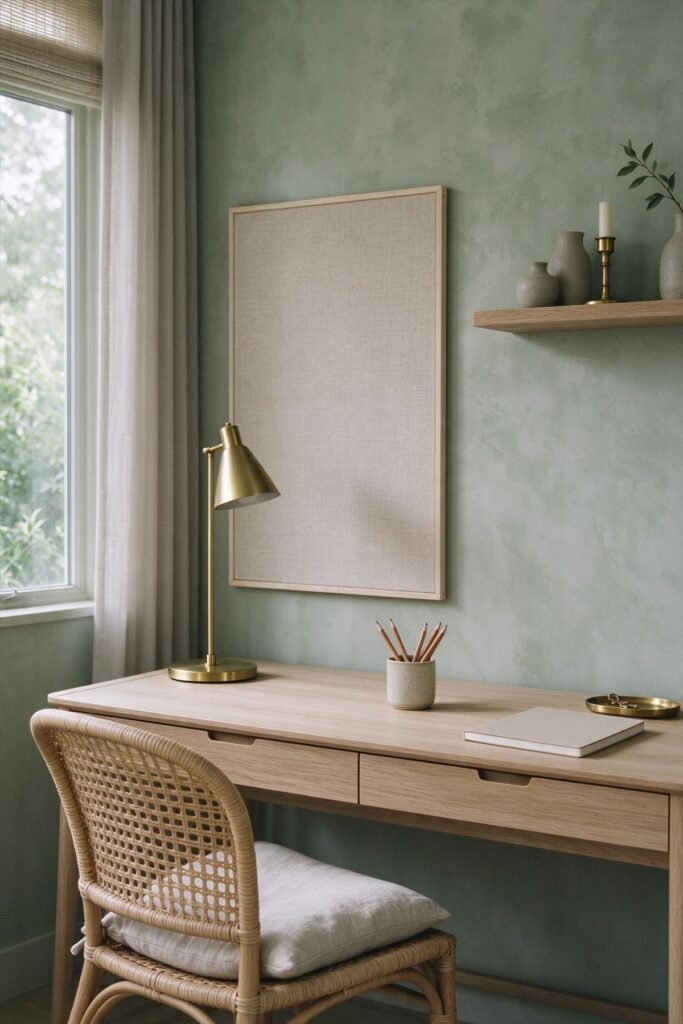
A single overhead light sends everything downward. It flattens textures, puts shadows under your eyes and leaves the corners dark. Your room can have good furniture and still feel like a waiting room after sunset.
The fix is more sources of light, set lower, with warmer bulbs. It doesn’t need an electrician, and you can do most of it in an afternoon.
Think in three layers
- Ambient light fills the room gently. It can come from a dimmable ceiling light or a floor lamp that bounces light off the wall.
- Task light helps you do something, like reading in a chair or cooking at a counter. It should be focused and within easy reach.
- Accent light adds depth. A picture light, a small lamp on a shelf or a candle gives your eye somewhere to rest.
Turn the big light off. See what’s missing. Add that.
The five-step lamp fix
- Turn off the ceiling light and look at where the room goes dark. Those dark corners are your shopping list.
- Aim for three points of light in a loose triangle around the room, so light comes from more than one direction. Larger rooms may need more.
- Keep lamps near eye level when seated. Light from this height feels softer and more flattering than light from above.
- Choose warm bulbs. Look for around 2700K on the box. If color matters to you, a high CRI rating (90 or above) helps fabrics, wood and skin look natural.
- Add dimmers where you can. A plug-in dimmer or a smart bulb lets you lower the lights as the evening goes on.
Check your shades
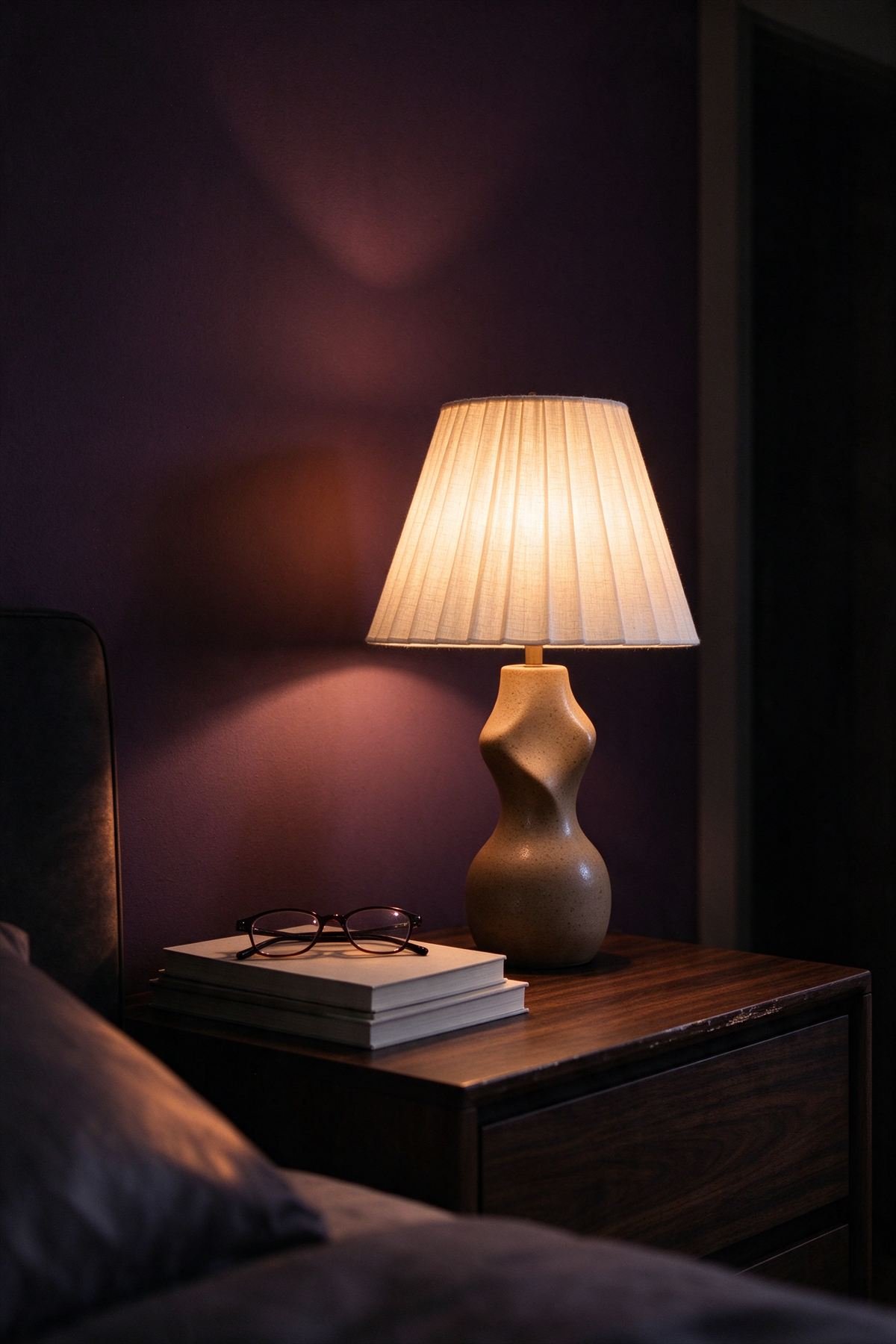
A shade changes the color and spread of a lamp’s light. Linen and pleated fabric give a soft, warm glow. Opaque shades push light up and down in defined pools, which feels more dramatic. If a lamp seems harsh even with a warm bulb, try changing the shade first.
Want to take it further?
Velvet Dusk is built almost entirely around this idea, with deep walls and small pools of lamplight.